Review: Ray-Ban Meta Gen 3 (2026)
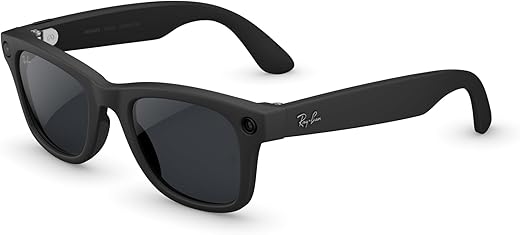
The projected specifications for the Ray-Ban Meta Gen 3 paint an ambitious picture, aligning closely with anticipated 2026 trends in wearable technology. The significant jump in display resolution, targeting at least 1080p per eye and potentially 1440p, will be crucial for delivering truly immersive AR overlays that don’t feel pixelated or jarring. This, coupled with a higher refresh rate of 90Hz to 120Hz, will directly combat motion sickness and eye strain, making extended use more comfortable. Increased brightness, exceeding 1000 nits, is essential for outdoor usability, a common pain point for current smart glasses. While a wider field of view remains an engineering hurdle, even incremental gains will enhance the sense of presence in AR environments.
Under the hood, the custom-designed SoC on a 3nm or 4nm process node is a critical component. This will not only boost raw performance for complex AR rendering but also significantly improve AI processing capabilities. The inclusion of 8GB to 12GB of RAM and UFS 4.0 storage will ensure smooth multitasking and rapid data access, vital for real-time sensor fusion and AR asset loading. The camera system’s upgrade to a 12MP or 16MP sensor, alongside a more powerful ISP, promises better image quality and advanced computational photography features. The potential introduction or enhancement of depth-sensing technology, like a miniature LiDAR, is a game-changer for accurate 3D scene understanding and interaction, directly supporting more sophisticated AR applications. Spatial audio and advanced noise cancellation will elevate the user’s auditory experience, making communication and media consumption more engaging. Connectivity is also set for a major upgrade with Wi-Fi 7 and Bluetooth 6.0, paving the way for lower latency and higher bandwidth, essential for data-intensive AR experiences. The possibility of integrated 5G/LTE would grant these devices true standalone potential, reducing reliance on paired smartphones.
Looking ahead to 2026, these specifications are indicative of several key trends. MEMS drivers may play a role in future audio advancements for miniaturization and efficiency. Wi-Fi 7 is poised to become standard for high-bandwidth, low-latency wireless communication, which is paramount for AR data streaming. The emphasis on on-device AI processing, facilitated by dedicated co-processors and efficient chipsets, will enable more intelligent, privacy-focused features. The push towards standalone capabilities, improved durability, and more intuitive interfaces suggests that smart glasses are moving towards becoming truly integrated personal computing devices, rather than mere smartphone accessories.